Daly City performance guide
Energy-Efficient Windows in Daly City: Read air leakage beside U-factor.
Daly City window planning should distinguish several observations that are often lumped together: cool glass, unwanted air, moisture, exterior weather, and sound. Our team records where and when each concern appears, then compares exact window ratings without asking the label to diagnose the wall. The weather-facing perimeter deserves its own inspection and written installation plan.

Energy-efficient windows
Use whole-window ratings to choose glass for each room.
Compare complete-window ratings for the actual Daly City room, then balance heat flow, solar gain, daylight, ventilation, and the glass appearance you want to live with.

Trace the Daly City symptom before selecting a window
We stand near the affected opening during the conditions when the concern is noticeable and note whether air is felt at the sash, lock, trim, sill, or a nearby vent; whether moisture is on the room-side glass, between panes, or at the wall; and whether sound follows the closed window, another penetration, or the room generally. Photographs and timing are more useful than a guessed cause.
We compare an exposed room with a sheltered room in the same home and record window operation, visible sealant or staining, indoor moisture-producing activities, shades, exterior drainage, and how securely the sash closes. We can inspect the complete opening and use those observations to decide which product data and perimeter details belong in the next comparison.

Keep thermal, air, and sound questions distinct
U-factor compares heat transfer through the whole manufactured window. Air-leakage data describes the tested unit under specified conditions. Neither number measures installation gaps in the existing opening, and an energy label does not provide a complete sound rating. Our team requests configuration-specific information and explains which observation each value is meant to inform.
For bedrooms or other rooms that still need ventilation, our team evaluates operating style, secure opening, screen placement, clear-opening requirements, and hardware reach alongside the performance data. A tightly closing configuration may be valuable, but it must also serve daily use. The team reviews glass area and visible transmittance where the room relies on soft daylight rather than direct solar control.

Write the Daly City weather edge into the installation scope
Our team inspects the sill, drainage path, exterior sealant, trim, cladding or stucco, and visible wall condition before choosing what will remain. The proposal should explain removal, preparation, any flashing inspection point, water and air treatment, fastening, insulation, compatible sealants, and the exact interior and exterior finish. Generic perimeter sealing language is not enough for a weather-facing opening.
At the walkthrough, we open, close, and check the locks on operable windows. We inspect the glass, drainage paths, sealant joints, trim, and cleanup for every window, and check screens where fitted. We keep the labels and product records for the installed windows. Any moisture or wall concern outside the contracted window work should remain clearly identified rather than being erased by an efficiency promise.
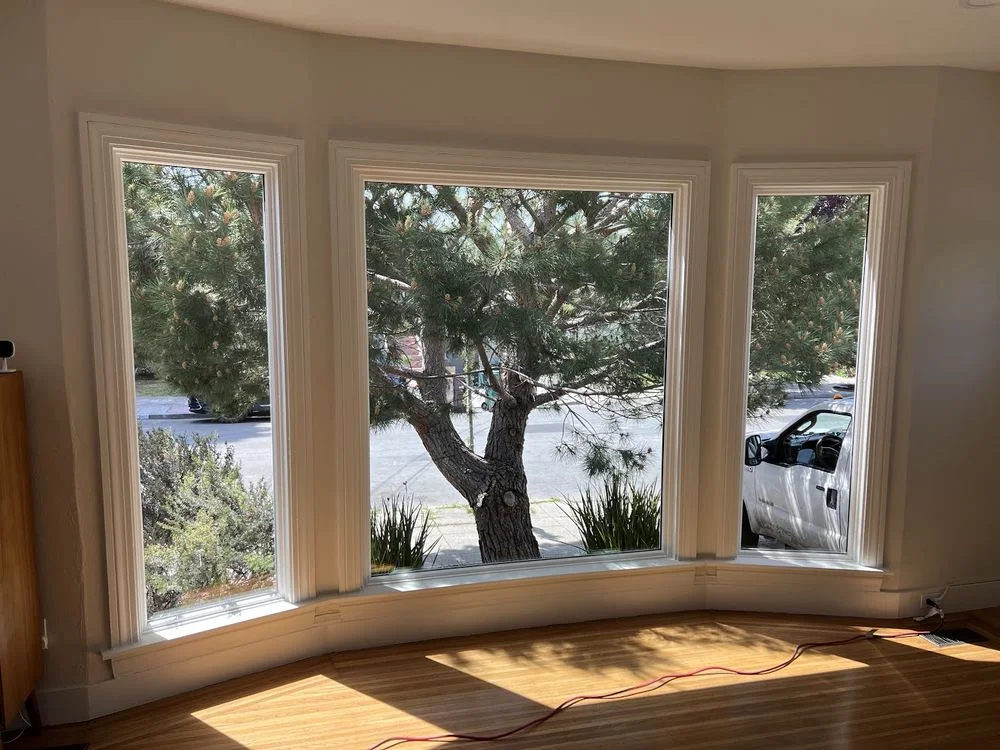
Energy-efficient windows
Choose whole-window performance for the rooms you use in Daly City.
Energy-efficient does not describe one universal glass package. Compare the exact window label with the room’s sun, shade, glass area, daylight, and ventilation needs.
Read the complete-window label
Match ratings to the room instead of chasing one number.
U-factor, solar heat gain coefficient, visible transmittance, and air leakage describe different parts of performance. Review the values for the precise size, style, and glass package being quoted.
Use ratings for the exact quoted configuration
Note orientation, shade, and when comfort changes
Balance solar control with daylight and ventilation

Put air movement beside heat transfer
Compare whole-window ratings for the rooms in your Daly City home.
For windows in Daly City, compare U-factor, solar heat gain, visible transmittance, and air leakage for the exact proposed configuration with weather exposure, room humidity, shade, operation, glass area, and the condition around the frame. Product ratings describe the tested window; the estimate must separately explain the installation and finish work.
- Air leakage
- The label’s air-leakage number measures passage through the product during standardized testing, not through the surrounding wall. Lower is less measured leakage.
- U-factor
- U-factor measures thermal transfer through the rated window as a unit, with lower values identifying better resistance to heat flow through the product.
- Condensation resistance
- A higher condensation-resistance result signals better comparative resistance to interior condensation under the rating procedure; conditions in the home still vary.
Plan the next step
Separate Daly City glass, sash, perimeter, and room observations
Our team records the observed conditions during the home visit. The resulting estimate combines an exact product comparison with a clear explanation of what the team inspected, retained, removed, sealed, and finished.
- Location and timing of air, moisture, sound, and cool-surface observations
- Exact U-factor, published air-leakage data where available, glass, operation, and any sound-specific data
- Ventilation, clear-opening, screen, lock, and hardware requirements
- Sill, drainage, flashing visibility, perimeter treatment, and finish scope
- Final operation, seals, drainage paths, labels, cleanup, and open concerns